First the sermon, then the musical absolution: the elfurenmis soothes word with sound
On five Sunday mornings each season, cultural centre De Velinx in Tongeren transforms into a sanctuary of ritual and reflection. Contemporary classical music and a sermon delivered by an engaged speaker invite the audience to pause, think, and feel, drawing attention to the pressing questions of our time. The Elfurenmis (Eleven O’Clock Mass) is a celebration of word and sound for modern-day pilgrims willing to surrender to an intimate experiment.
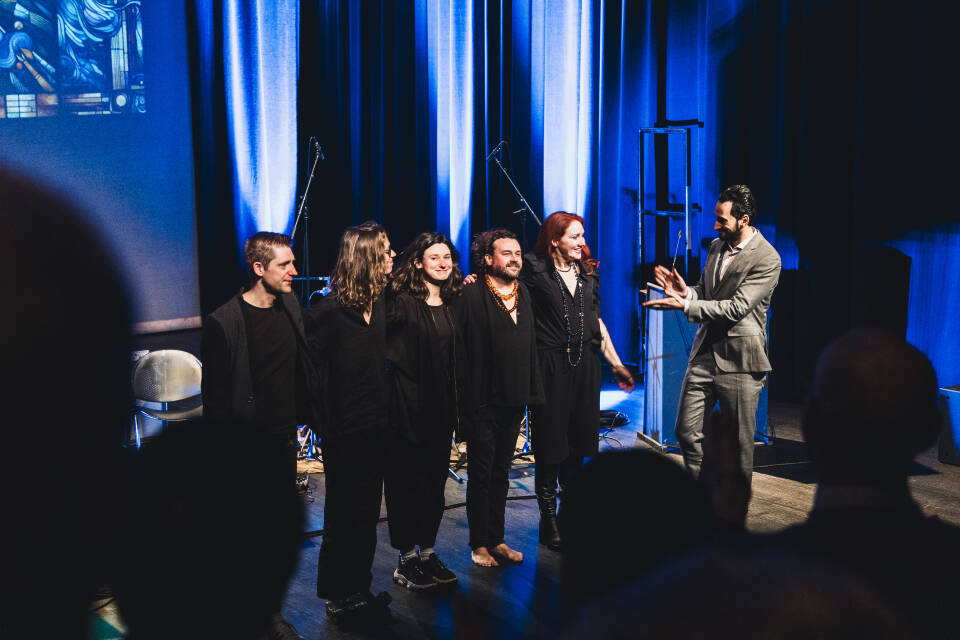

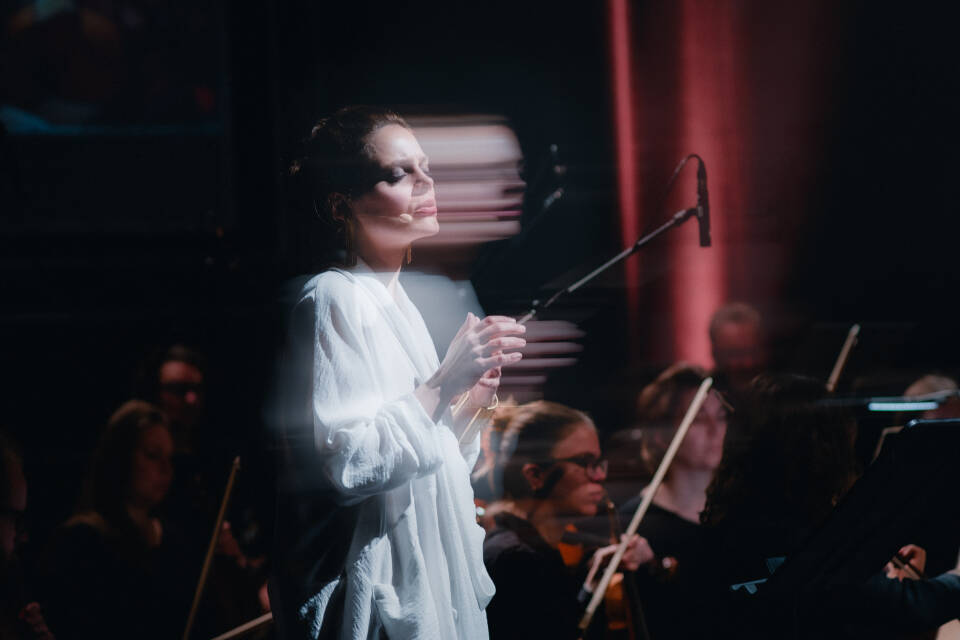
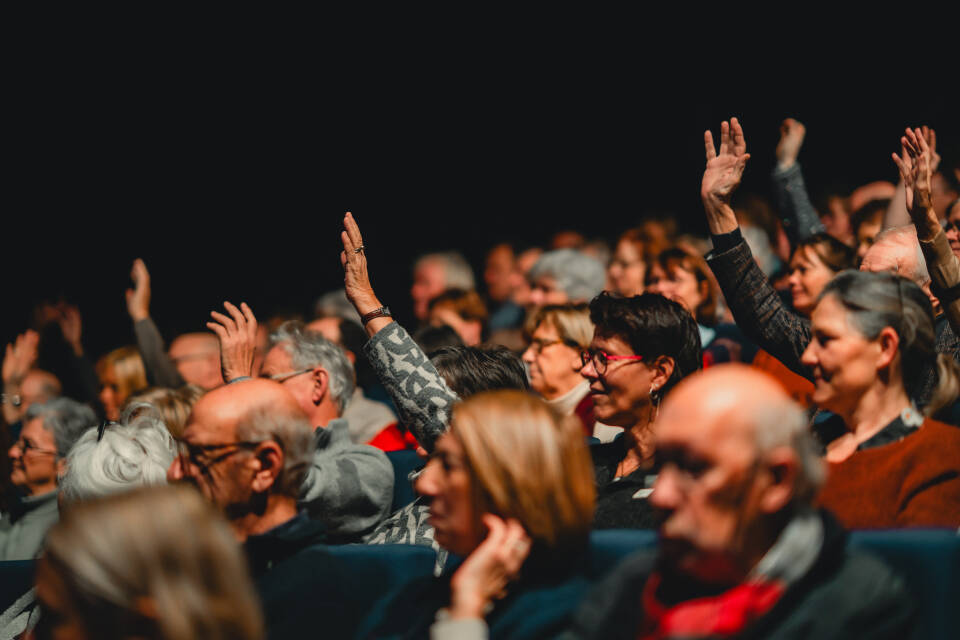

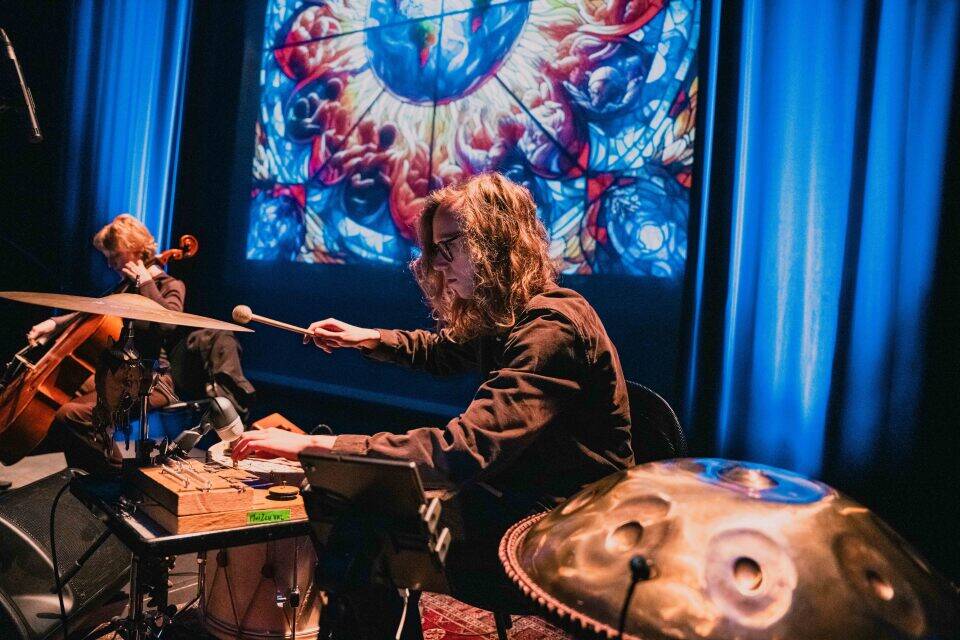
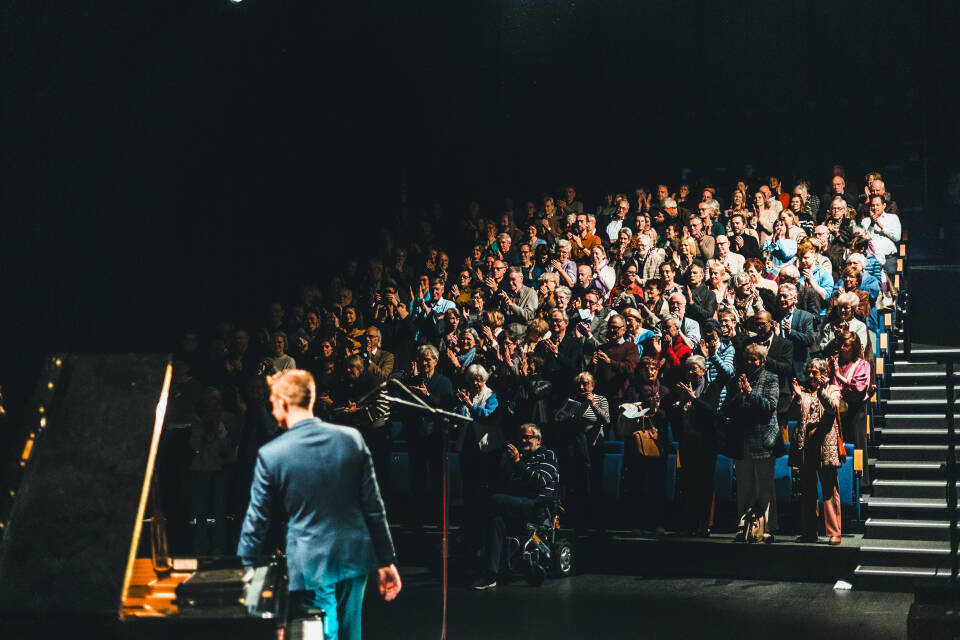


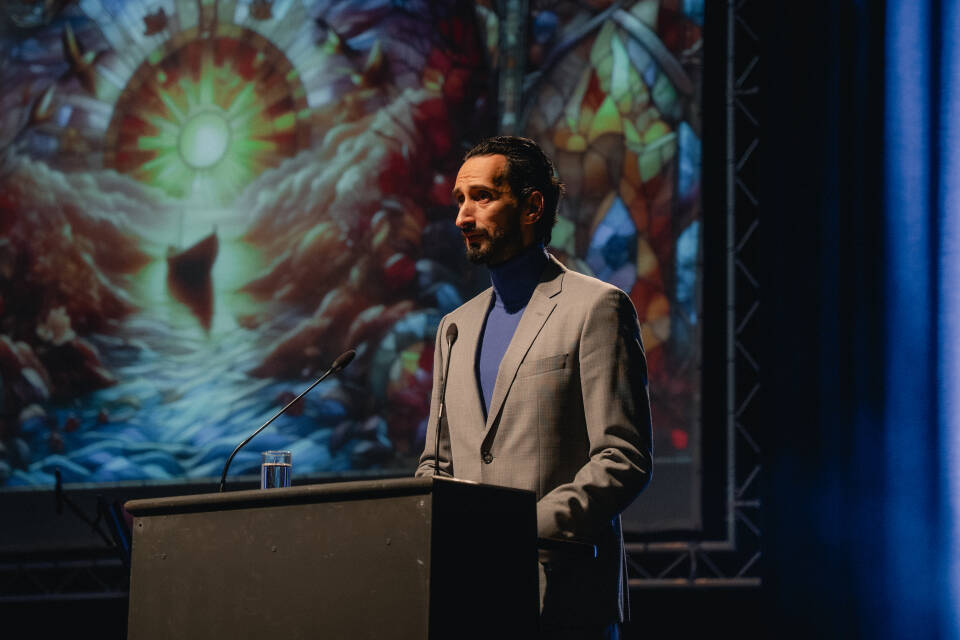
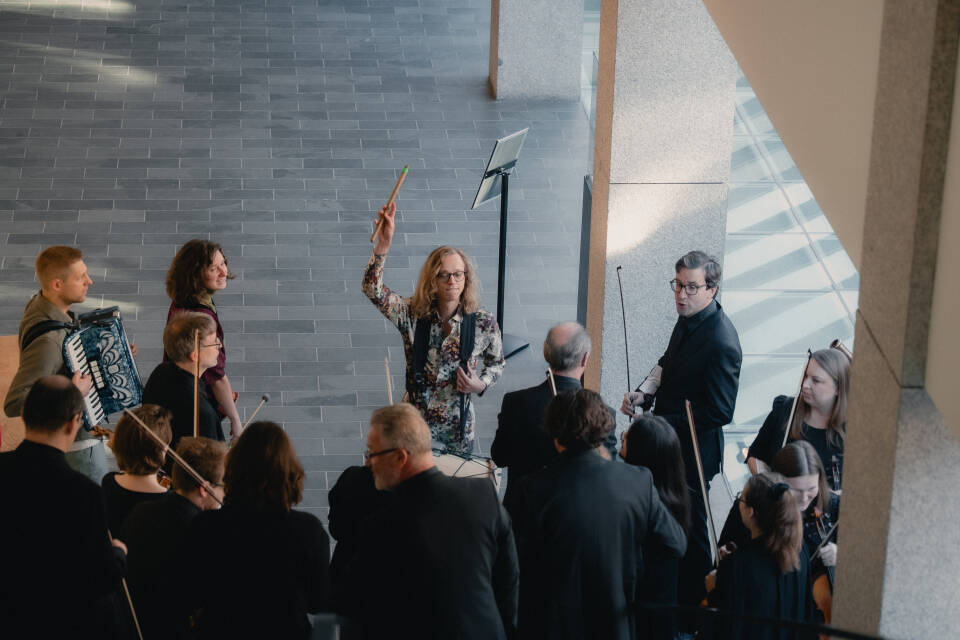
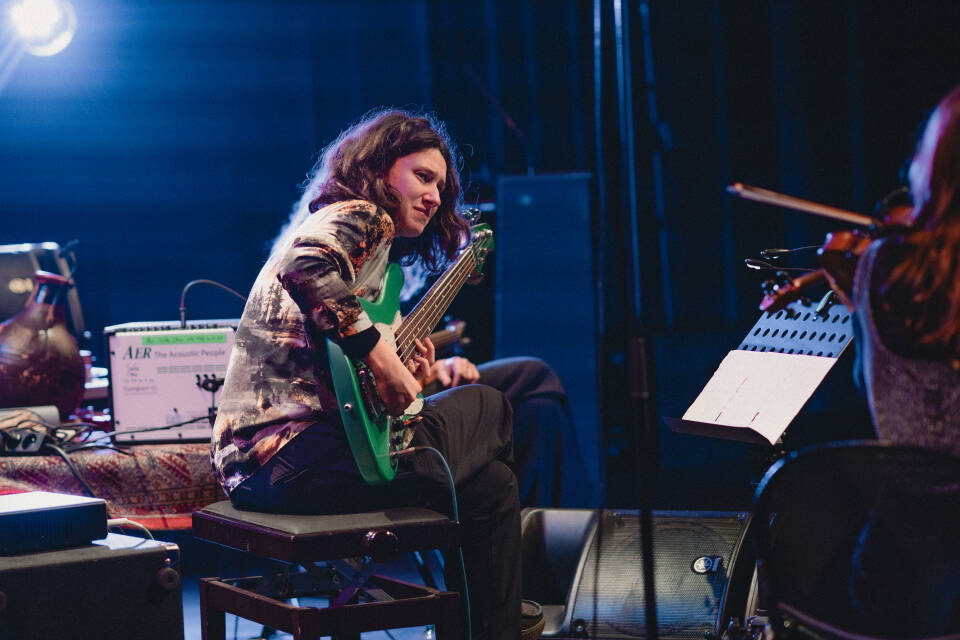


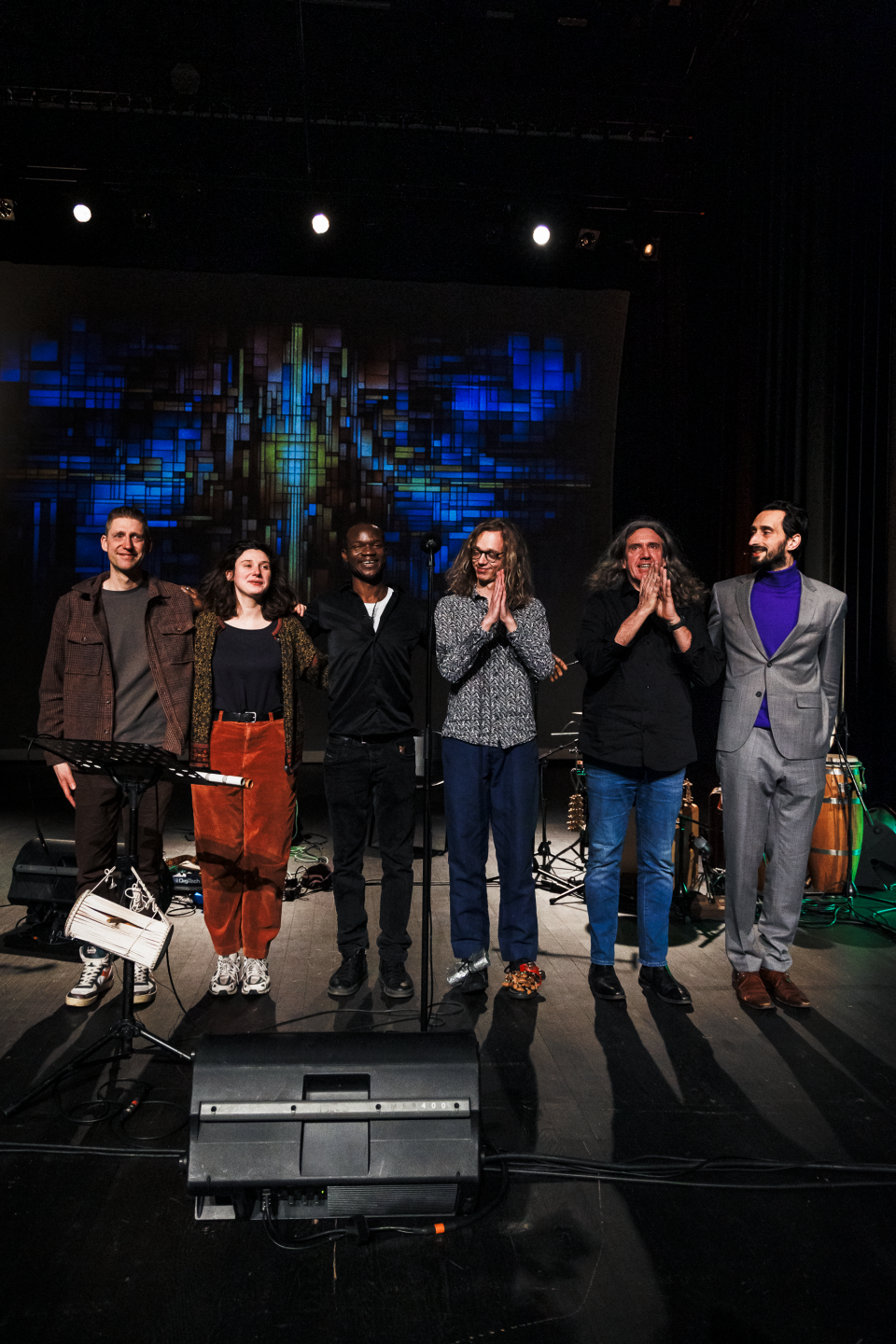


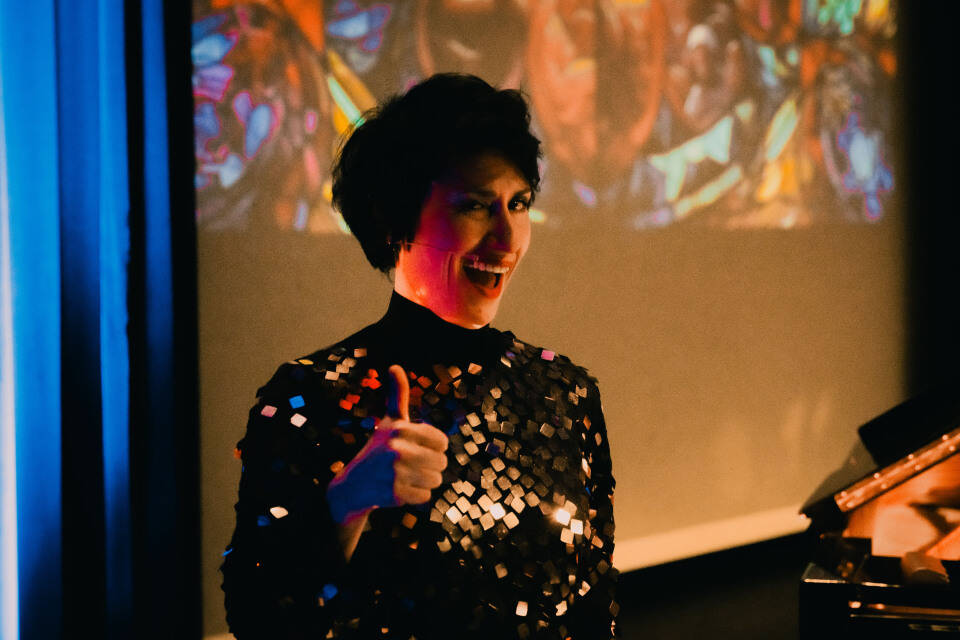
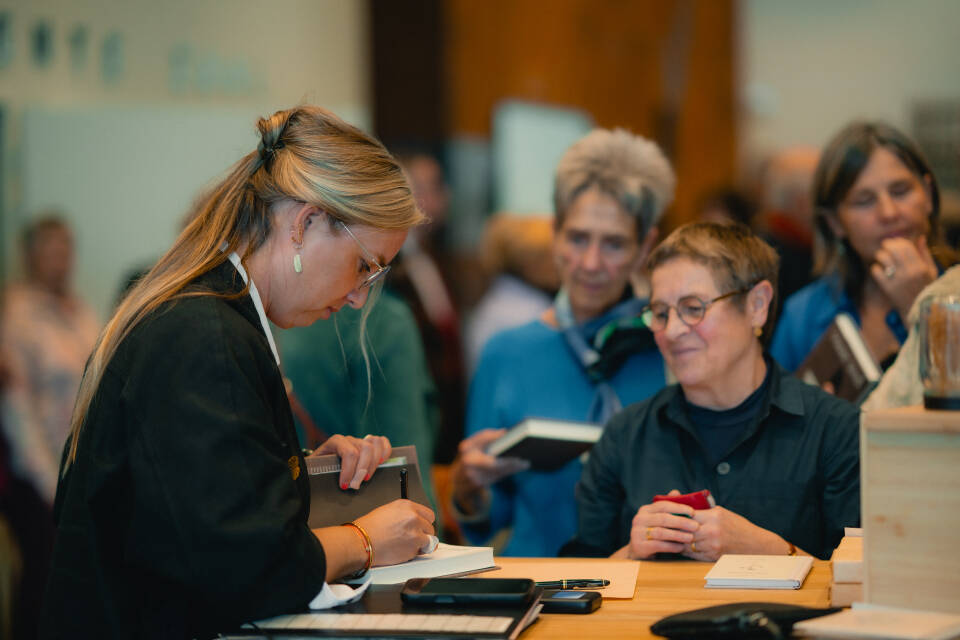
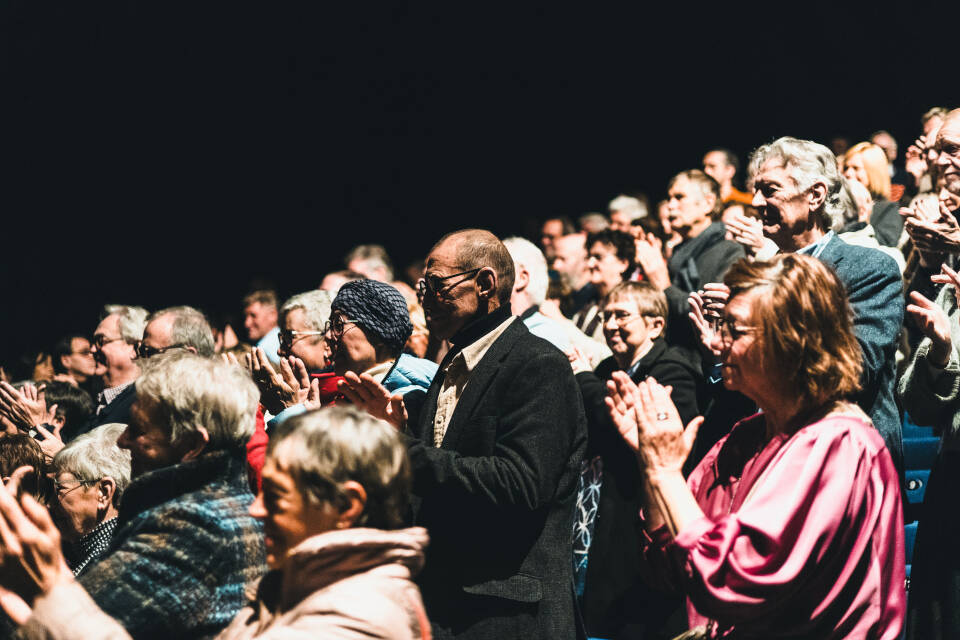


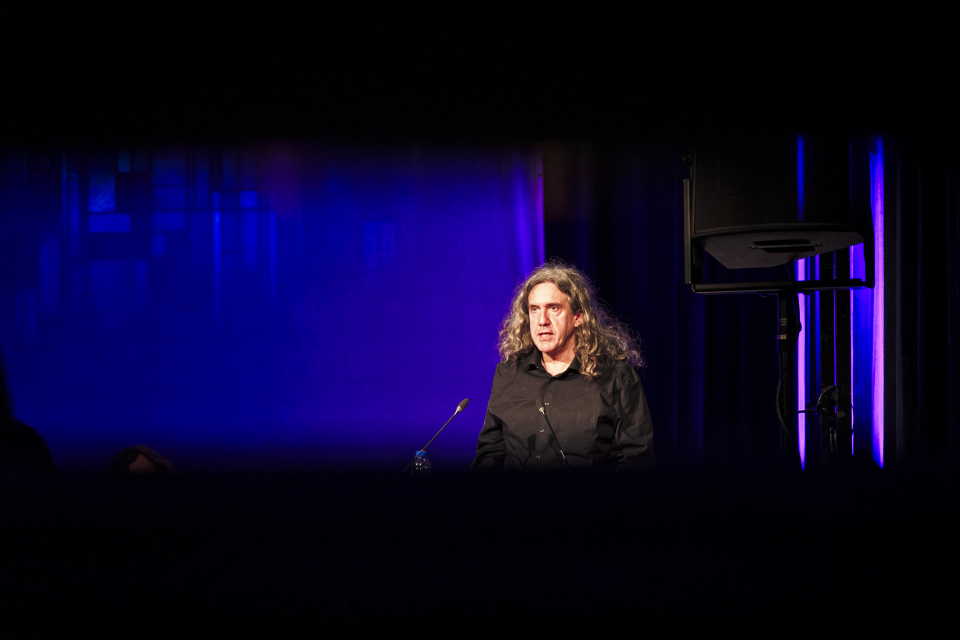
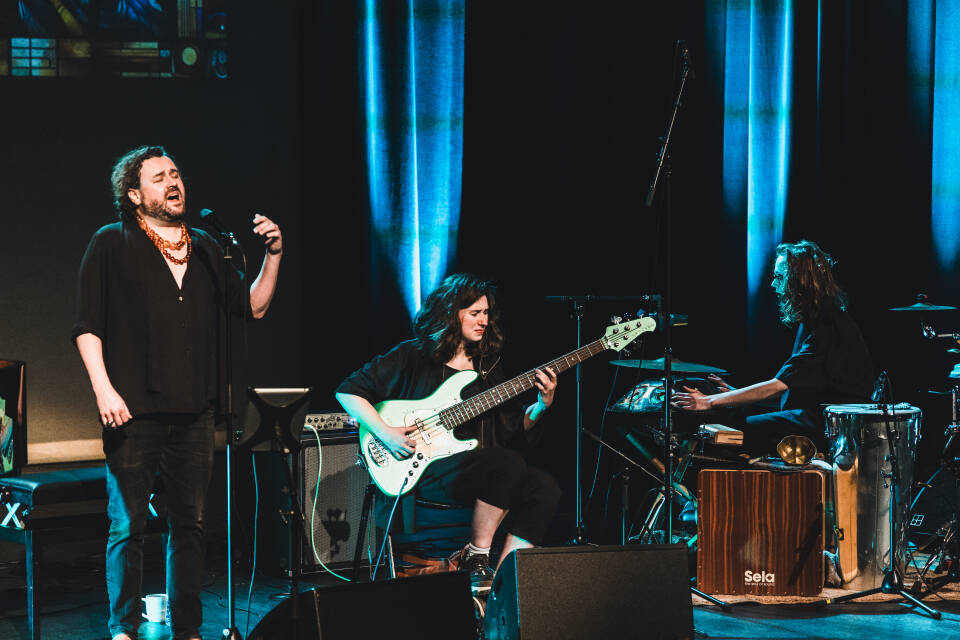
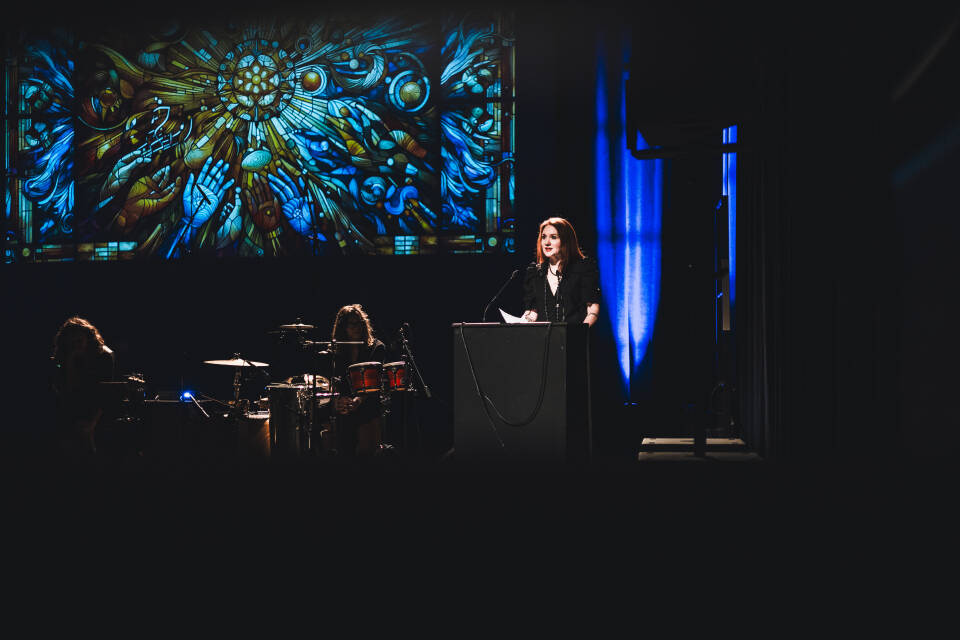
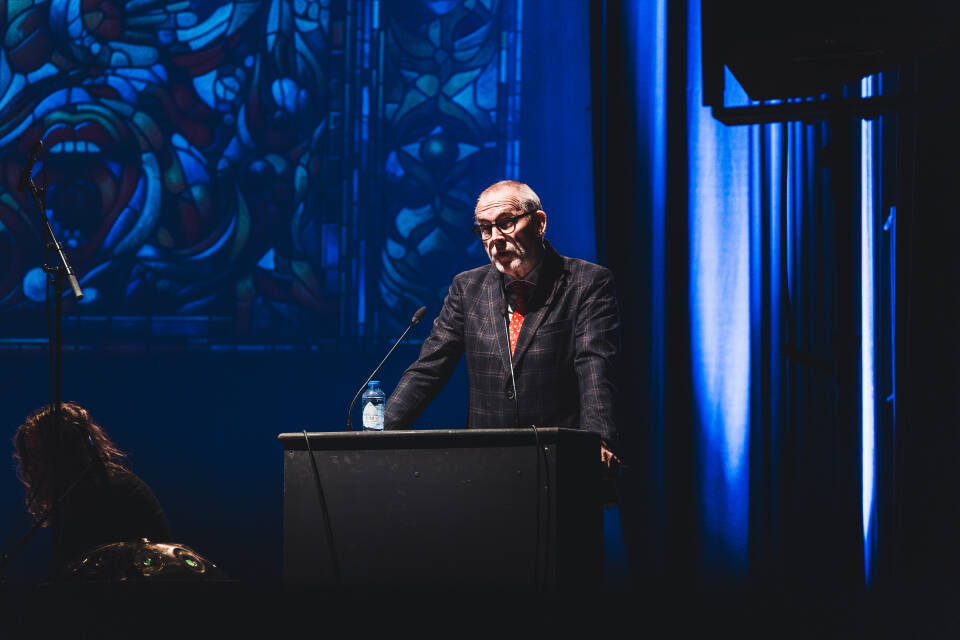

For first-time visitors, the Elfurenmis carries an immediate sense of recognition. As soft music plays, the audience finds their seats beneath the glow of a stained-glass projection above the stage. The house band, led by percussionist Bert Peyffers, eases in, while master of ceremonies Rashif El Kaoui opens the ritual, inviting the audience into a moment of stillness.
“With the words ‘welcome inside,’ I create a sense of community, though in a way that is more sacred than religious,” says El Kaoui. “It’s an invitation to be present and to leave the outside world behind for a while.” After more than twenty editions, he knows that people need an anchor of sorts. “It’s reassuring that, alongside the speaker who changes each time, there is also a familiar presence the audience can relate to.”
Following the welcome, which can move between slam poetry, reflection, and performance, the guest speaker takes the stage. They are given one clear instruction: deliver a sermon, not a lecture. And yes, there is a difference, emphasises Johan Wouters, director of De Velinx. “A lecture is too noncommittal. Those who speak here are not meant to teach, but to take a stand. In doing so, they challenge the audience - it becomes impossible to remain unaffected. At the very least, our speakers invite you to think for yourself.”
A Sense of Urgency
A co-production by De Velinx and B-Classic, the Elfurenmis was born from their joint vision. The idea of a thunderous sermon set things in motion, but it was never the final stop.
“I’m a fan of the podcast Zwijgen is geen optie, which brings together conversations with people trying to make the world a better place,” says Wouters. “My goal was to bring voices like that onto the stage. We look for speakers with a sense of urgency. People who address issues that genuinely matter, from grief and populism to AI and the complexities of the asylum debate.”
At the same time, Wouters began working with B-Classic to explore how classical music might reach new audiences. Bob Permentier, artistic director of B-Classic, pointed to the success of the aperitif concerts he had previously curated for a festival. “What do people do on a Sunday morning?” he recalls. “They used to go to the eleven o’clock mass, so creating our own version felt like a natural step.” The team distilled the essential elements of a traditional mass - welcome, sermon, and reflection - into a contemporary format in which music becomes the response to the spoken word.
Throughout the performance, master of ceremonies El Kaoui keeps a firm hand on the reins: the audience is asked not to applaud. Those who do are met with a playfully raised eyebrow. “The sacred dimension is essential to any mass,” Wouters explains. “After the sermon, we even prolong the silence, allowing the words to settle. Only then does the solo artist enter — the point at which something shifts.”
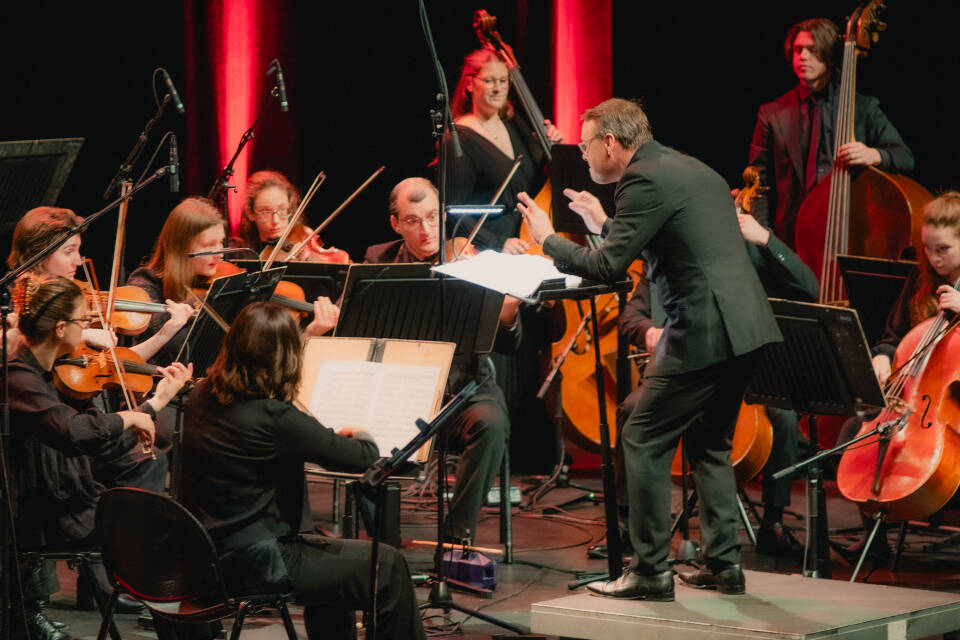
The music in the Elfurenmis is not simply a concert. Its sonic landscape resonates with the themes and ideas raised by the speaker, Permentier explains. “Words are allowed to chafe, but music often does too. By pairing a soloist with our house band, we fully embrace experimentation. Our audience is open to that: they want to reflect on what is being said, but they also want to listen closely as a soloist begins a dialogue with the band.”

Swiss Army knife
But how does the three-piece house band go about it? Are the musicians given an in-depth preview of the speaker’s sermon, or do they delve into the soloist’s repertoire in advance? As it turns out, it’s a bit of both.
“We know the theme of the sermon, and musically we can either reinforce it or push back against it,” pianist Andy Willems explains. “The advantage is that both the speaker and the soloist arrive with strong ideas. Shaping those into something new feels like stepping into a playground. As a musician, you couldn’t ask for a better gift.”
“The Elfurenmis isn’t recorded, which makes you more willing to take risks,” says percussionist Bert Peyffers. “For most concerts, you rehearse for hours on end, but here you’re given the freedom to experiment. What happens can only exist in that moment. It forces you to consider what best serves the music. For one edition of the Elfurenmis, I didn’t play percussion at all but picked up the guitar instead, because that’s what the situation called for.”
Still, nothing about it is ever without commitment, and the house band always remains at the service of the soloist, who sets the tone. “That allows us to sound different every time,” says bassist Louise van den Heuvel. “The three of us are deeply empathetic musicians: we offer plenty of input, but first and foremost we want to provide a solid platform for the soloist. Once that trust is in place, anything can happen.”
“In many ways, we’re best compared to a Swiss Army knife,” Andy Willems adds. “As a band, we’re versatile, and seasoned enough to adapt to any context. Every soloist draws us into a different world, yet each time it feels like returning to familiar ground.”

Solace of the ritual
The first edition of the Elfurenmis took place in October 2019, with writer Rachida Lamrabet as its central guest. “She delivered a thunderous sermon. It was devastating, but right on target,” Johan Wouters recalls. “On paper, we knew the concept held up. No holding back, nuance set aside for once: it felt refreshing. Live, it was even more powerful than we had anticipated. Even when the Covid pandemic hit shortly afterwards, we never had to cancel a single edition. Our audience had no trouble finding us on YouTube.”
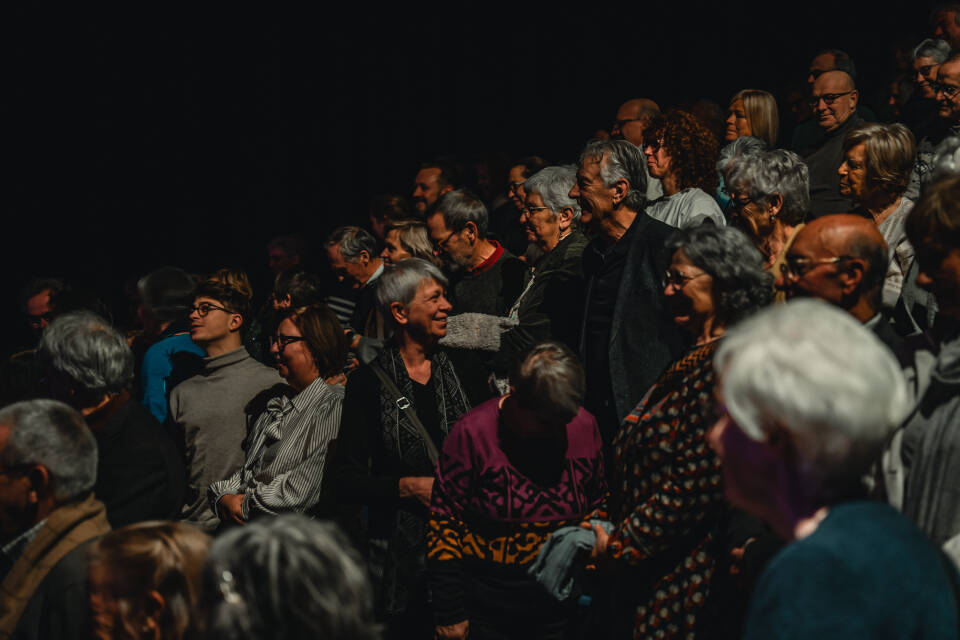
“It’s a simple but remarkably resilient formula that works,” Bob Permentier says. “We began with thirty people; today, every edition sells out in advance, with a largely returning audience. You can sense that people are eager to gain new perspectives on pressing issues. At the same time, I’m aware that the setting needs to remain intimate. A larger crowd, combined with more popular music, would dilute the format. The sense of warmth and solidarity experienced by those attending is what makes an Elfurenmis truly unique.”
Might the timing, in addition to the speakers and the musical component, also play a part? Does a Sunday morning audience differ from that of an evening performance? Wouters suspects it does “You arrive with a fresher, more open mind. At the same time, I dream of organising an Elfurenmis for young people at eleven o’clock at night, in a bunker or a club. But finding young speakers is a real challenge.”
A change of course, then, does not seem imminent, Wouters believes. “The Elfurenmis has become a hallmark of quality, it’s not something you tamper with lightly. The only thing that has changed over the years is that we’ve moved away from thunderous sermons. With our speakers, the emphasis is now on connection. Personally, I find it increasingly difficult to read the news or keep up with current affairs. There is so much negativity, and so little critical reflection. When people leave, they should do so with a renewed sense of hope.”
For master of ceremonies Rashif El Kaoui, solace lies in ritual. “There’s something about rites, of which so few remain in today’s world. We all seek connection to something greater, something beyond ourselves. An Elfurenmis should invite reflection, but it must never become religious or dogmatic. That’s why I close each edition with the same words: together, we confront our fears - and together, we find courage.”

Text and interviews by Sue Somers
Pictures by Joke Hendrix, Robin Todde en Jelmer Vervoort