One More Bite? Eat Me, or desire without breaks
How much is too much—and when, if ever, does it become enough? In Eat Me, director Aïda Gabriëls doesn’t set out to answer that question. She builds an experience around it instead. What unfolds is a kind of musical banquet, shifting between baroque opulence and techno drive, gradually pulling the audience in. Because wanting more comes naturally. Knowing where to stop is something else.










In Eat Me, director Aïda Gabriëls doesn’t set out to answer that question. She builds an experience around it instead. What unfolds is a kind of musical banquet, shifting between baroque opulence and techno drive, gradually pulling the audience in. Because wanting more comes naturally. Knowing where to stop is something else.
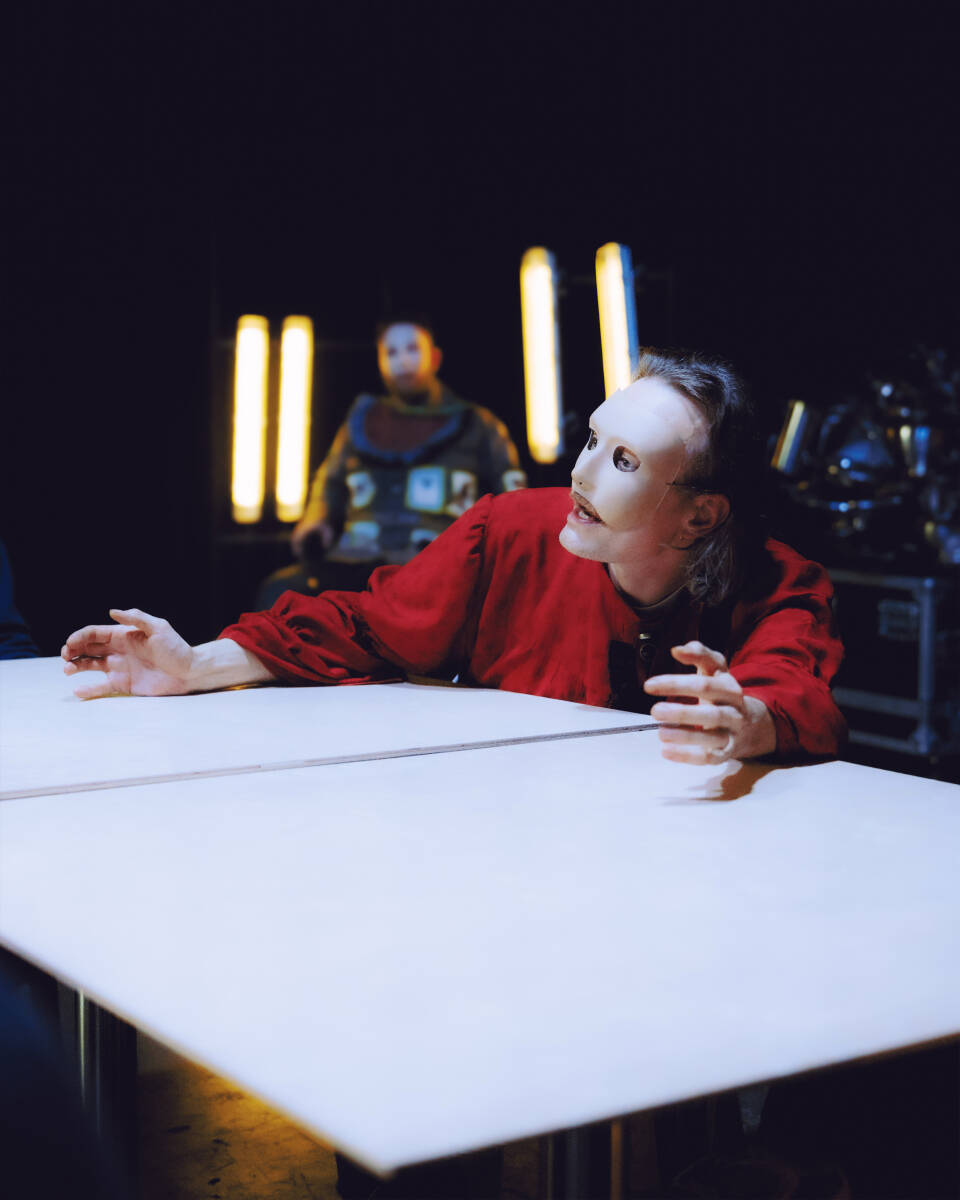
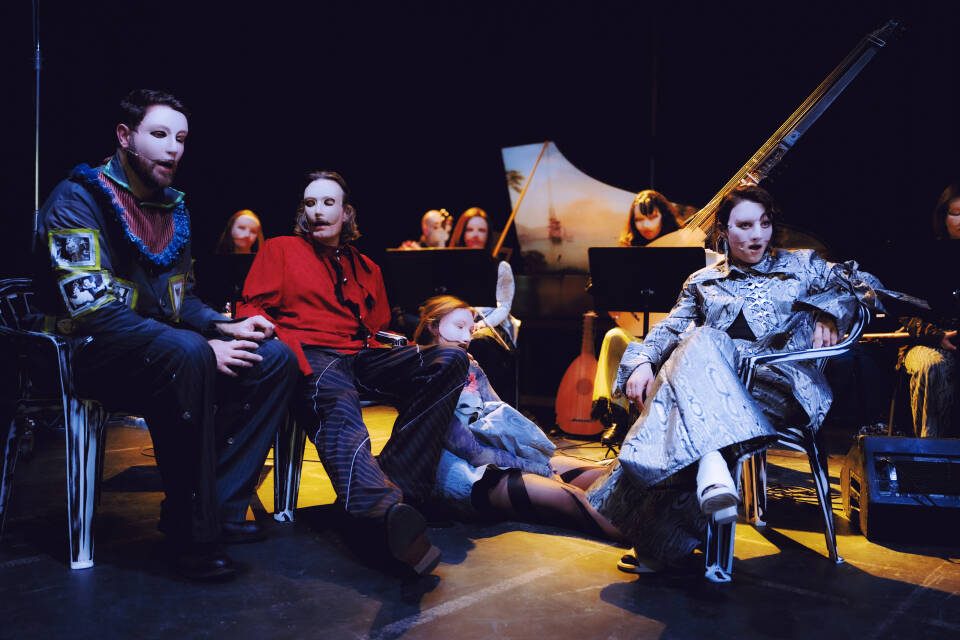
At the centre: a table. Around it: four figures. A chef, a performance artist, a critic, and a host, once an opera singer. It sounds like the setup for a joke, but no punchline follows. The food never arrives. What takes its place is another kind of consumption, one that turns inward.
Eat Me lingers in that uneasy space. Not asking what we want, but why the wanting never seems to end. Whether desire can ever be satisfied, or whether it simply sustains itself.
The piece draws loosely on La Grande Bouffe, the cult film in which four men retreat to a villa with a single goal: to eat themselves to death. A grotesque gesture, but also a lucid one. “I wanted to look at where we are now,” Gabriëls says. “Production never really stops, not even in the arts. That’s the system we’re in. The question is how we choose to exist within it.”
The reference remains in the background, but here there is no final excess, no point of collapse. Consumption seems to have stalled, yet everything continues. We stay seated. We keep watching. We go along with it. Not out of guilt, not out of resistance, but because stepping out isn’t so straightforward. The piece folds back on itself, tracing a loop no one quite escapes.
Together with writer and poet Dominique De Groen, Gabriëls developed a set of figures that operate more like functions than characters. The text acts as a loose score, leaving space for the performers to shift, test, and reframe their positions.
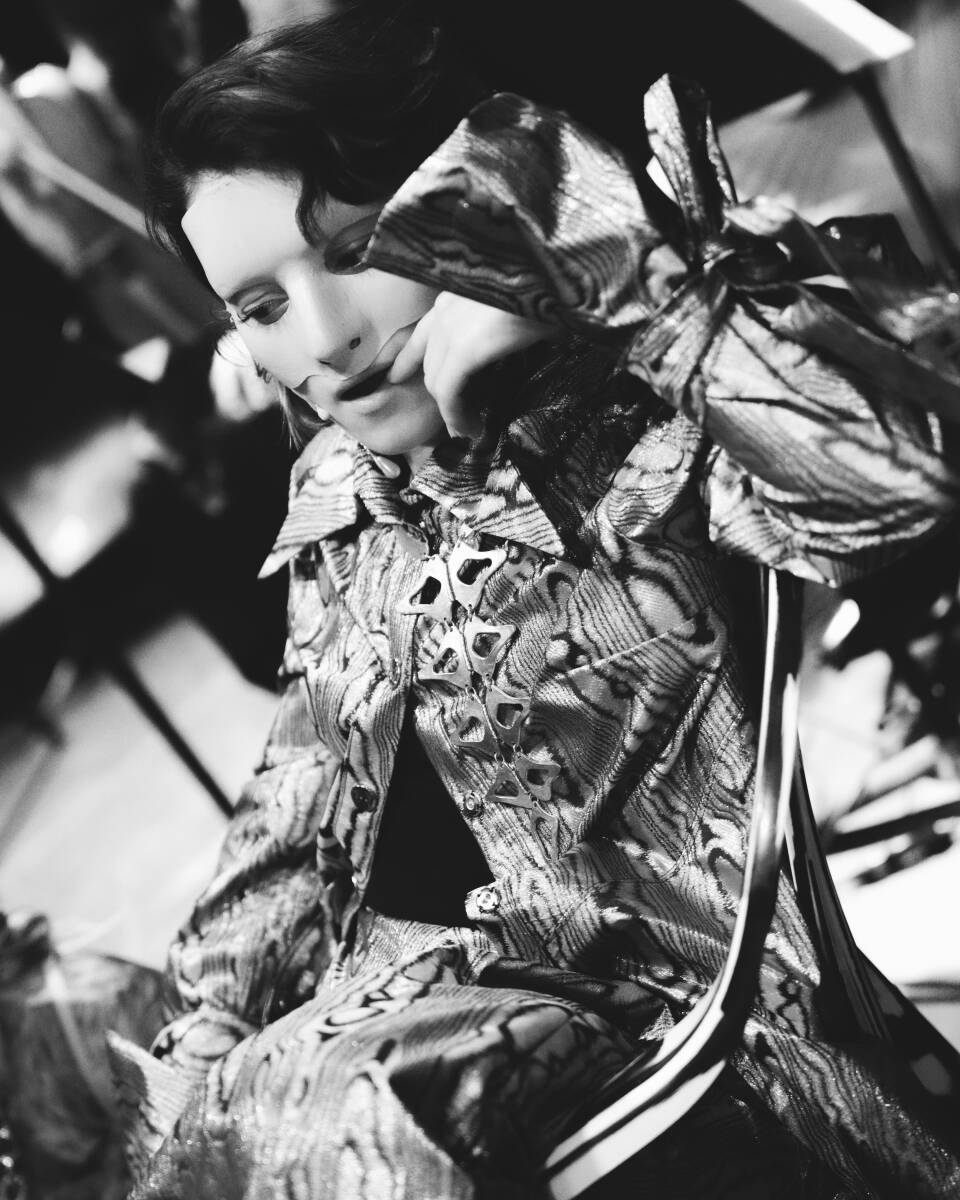
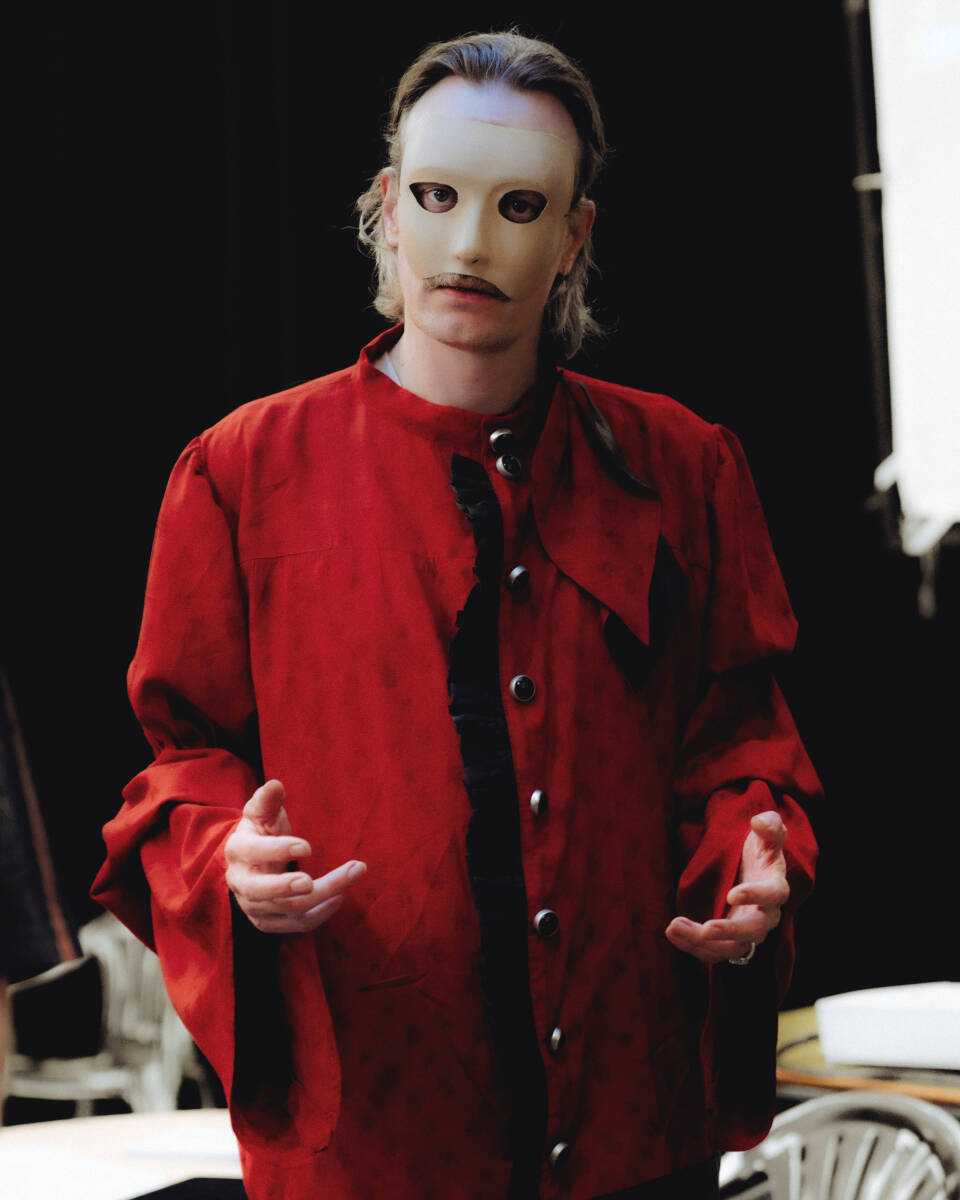
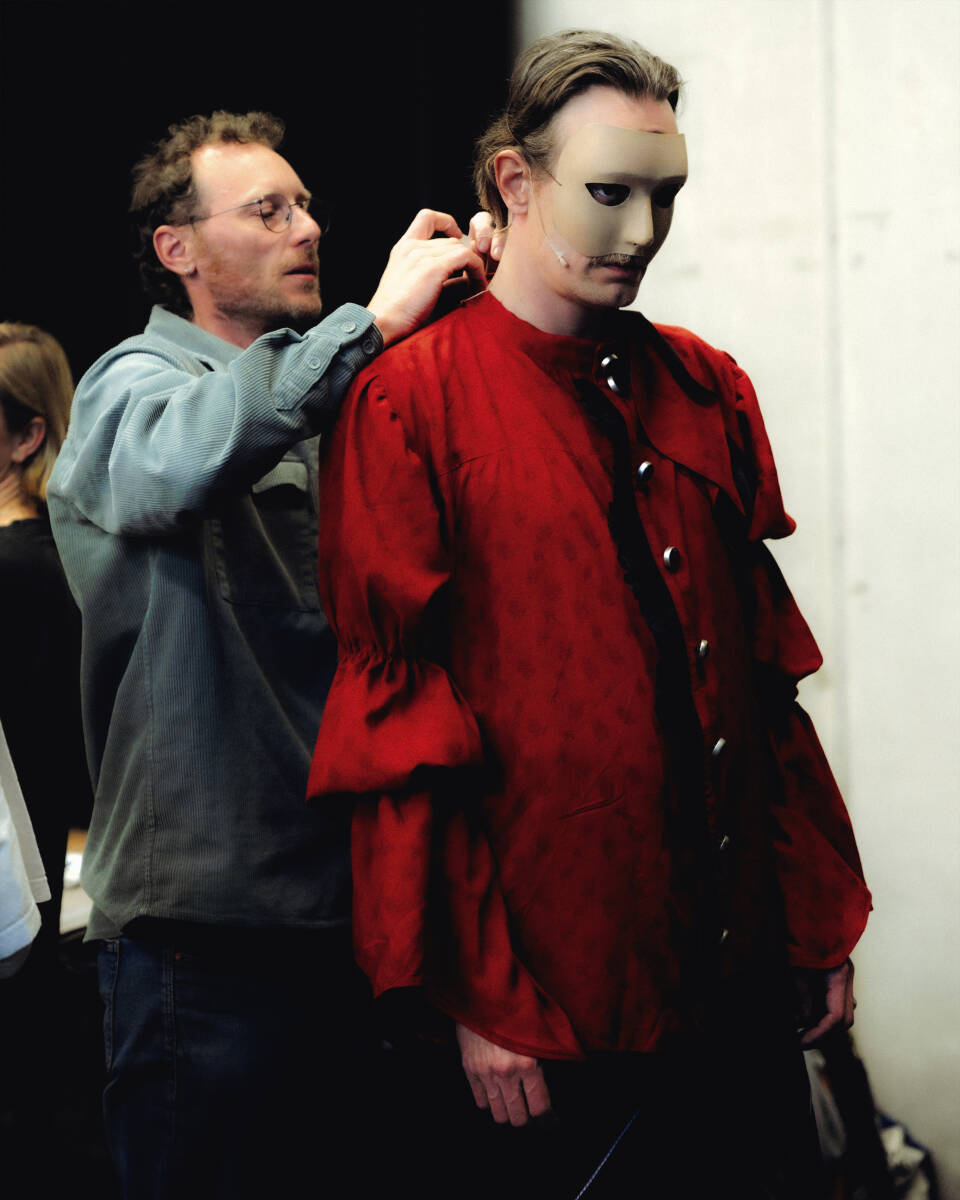
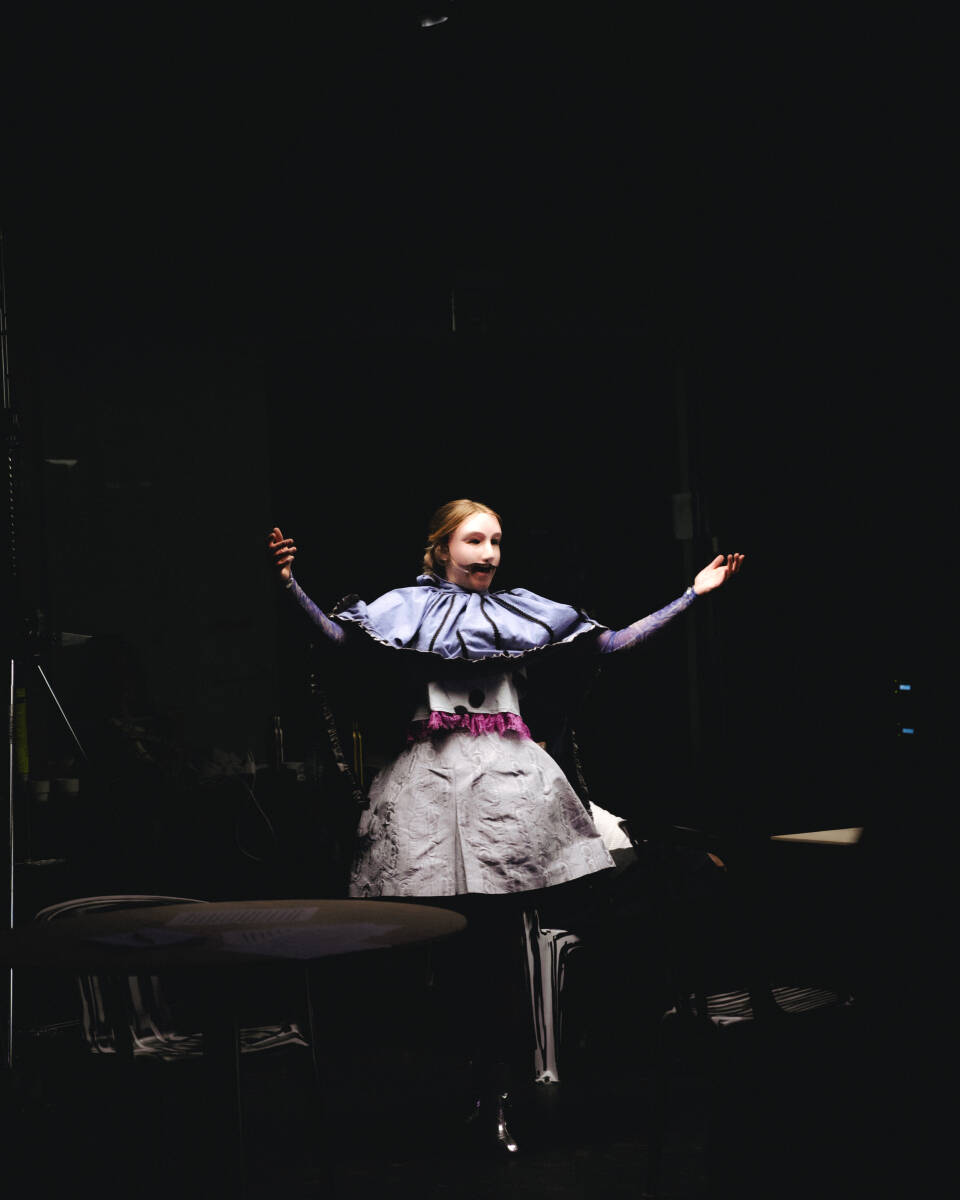
The host keeps things moving, polite, composed, but never neutral. The former opera singer speaks in fragments, her voice made up of echoes of past roles. The chef is locked into repetition, chasing an impossible ideal. The performance artist exposes what usually remains hidden, while staying entangled in the same structures. The critic searches for clarity, only to circle back into his own reasoning. And somewhere beneath it all, something else moves: a fifth presence, barely visible, adjusting the rhythm from within.

Doomscrolling
The performance takes the shape of a shared setting. Some audience members sit at the table, others observe from a distance. Either way, there is no outside position.
“That’s always been important in my work,” Gabriëls says. “You can’t pretend to stand apart. We’re all part of it. And at the same time, everyone feels the urge to step away now and then.”
Still, the piece doesn’t aim to accuse. Performer Linde Carrijn, who takes on the role of the performance artist, is clear about that. “It’s not about pointing fingers. It’s about recognising yourself in it. The world is already overwhelming enough, so what can art still do within that?”
Her answer remains open. “I’m part of it too. I consume, I doomscroll, I get pulled along. And at the same time, I try to make different choices. But it never quite feels like enough.”
That tension feeds directly into the work. “There’s this persistent image of the artist as privileged, disconnected, living off subsidies. I understand where it comes from, but it’s not that simple. That friction, between defending what you do and questioning it, is something I carry into the performance.”
For Carrijn, Eat Me also shifts her practice. The piece leans toward an installation format rather than a traditional stage setup. “You’re visible from every angle. There’s no fixed front, no stable position. And because so much emerges through improvisation, you’re constantly adjusting. It’s demanding, but it opens something up.”

The Baroque "Drop"
If excess is the starting point, baroque music feels like an obvious reference. But here it becomes something else: a framework that stretches toward the present.
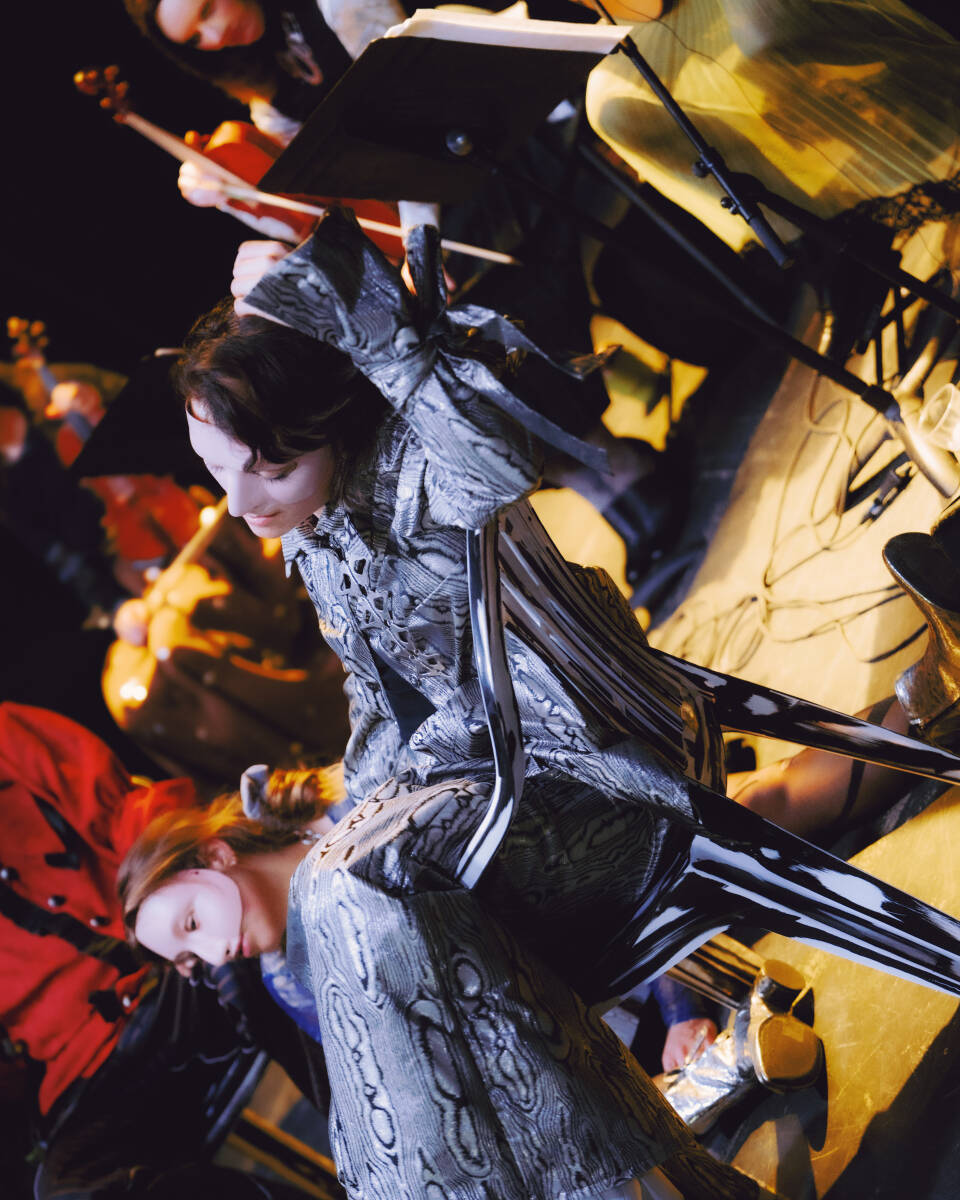
Performed by musicians from B’Rock Orchestra, the baroque material is interwoven with electronic elements by composer Jonathan Bonny. For him, the connection came naturally. “At some point I realised how close these structures actually are. The repetition, the build-up, the release — it’s not so far from techno. Even the ‘drop’ follows a similar logic.”
Rather than smoothing out the contrast, the music leans into it. Layers build, rhythms insist, tension accumulates without fully resolving.
“It’s about density,” Bonny says. “Seeing how far you can push it, when it starts to tip, without completely collapsing.”

A Lynchian ending
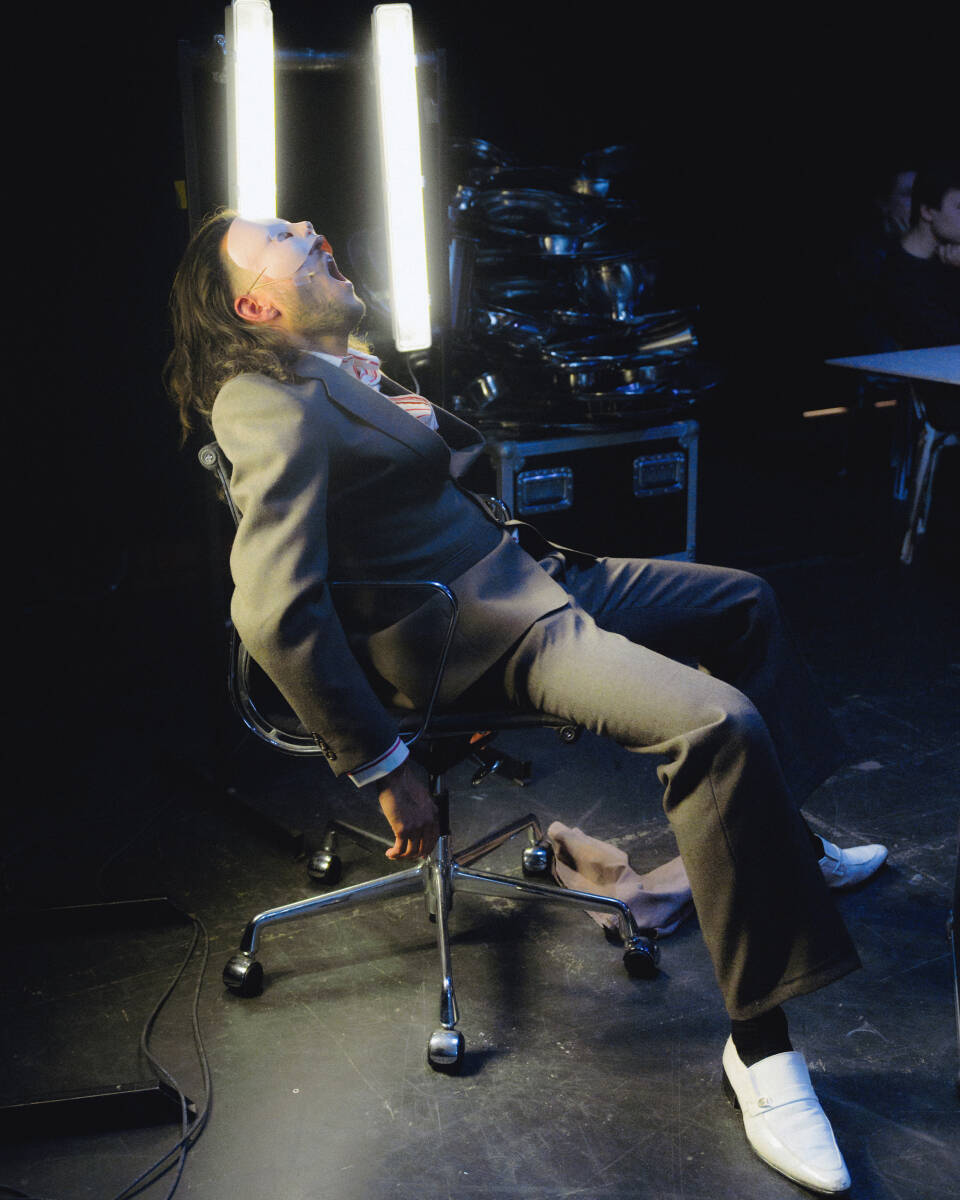
The visual world, developed with Brussels-based duo :mentalKLINIK, plays with that same friction. Familiar objects—like the white plastic garden chair—are reworked into something stylised, almost too clean. Recognisable, yet slightly off.
There is no clear ending waiting at the end of Eat Me. No resolution that ties things together.
“I’m not interested in closure,” Gabriëls says. “I’d rather leave something open. Something that keeps working on you—a bit like in a Lynch film.”
What remains is closer to an aftermath than a conclusion. A space that has been used, then reset. Chairs slightly out of place. Tables marked by what has passed. Some people left early, others stayed too long. And still, everything is arranged again.
What’s left is little more than being there together. Maybe that’s enough. Or maybe it never is.
Text and interviews by Sue Somers
Photos by Lucinde Wahlen