Cité vibes meet craftsmanship: The Great International State Orchestra of Genk takes the stage alongside professionals
Ever heard of a trunfa, a ribeb, or a darbuka? These distinctive instruments, and the people who play them, are the beating heart of The Great International State Orchestra of Genk. B-Classic brought them together with professional musicians for a unique performance. The result: a seamless blend of raw neighbourhood grit and tight musical craftsmanship, brought to life by an inventive colour-coded score.
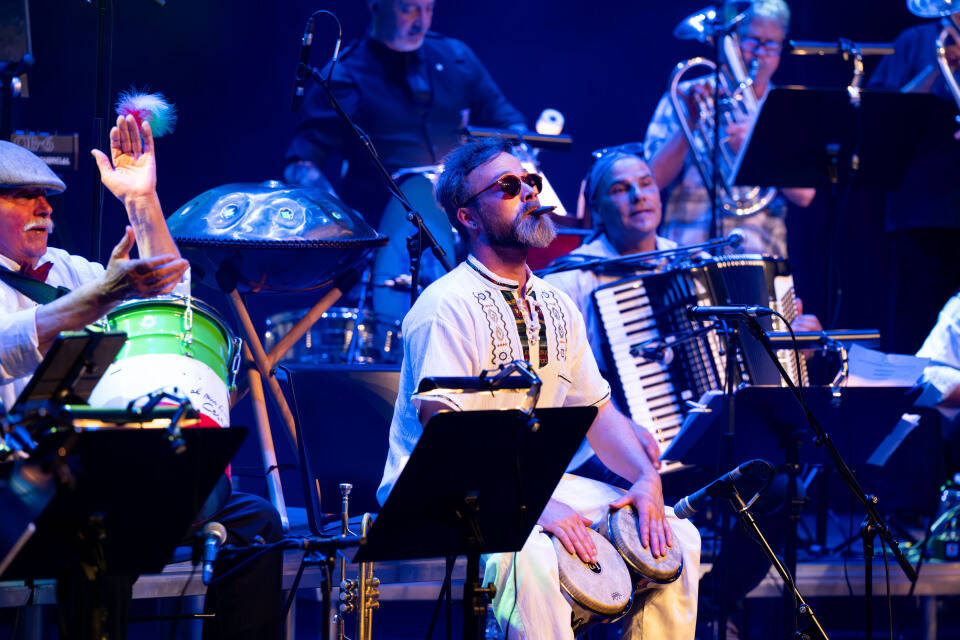


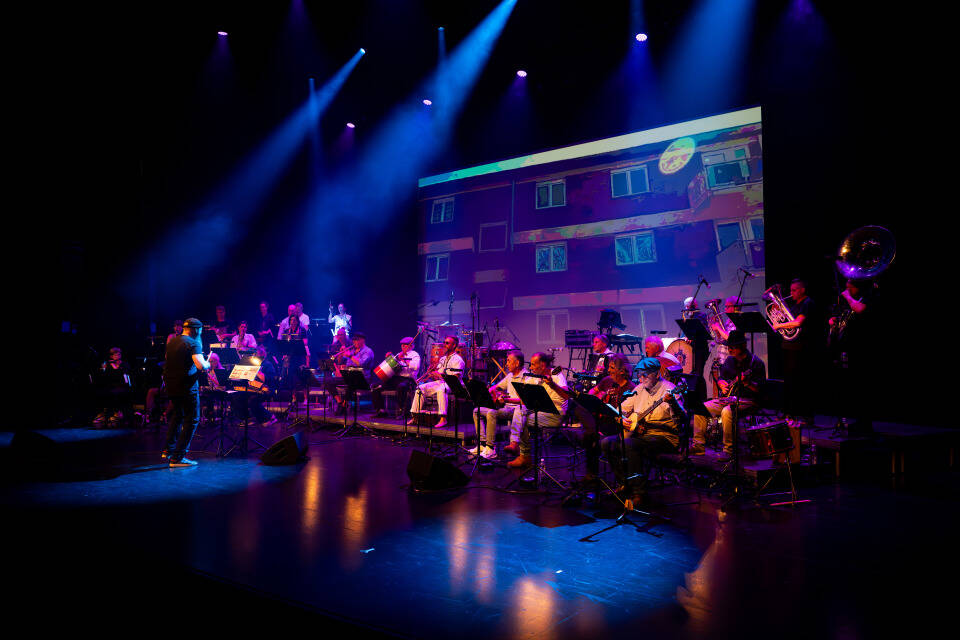
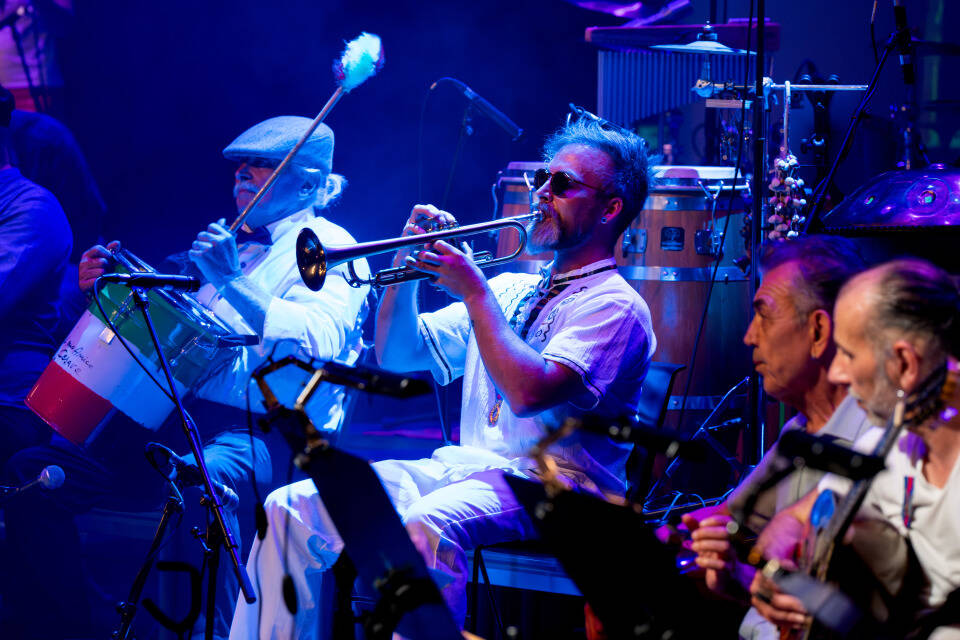

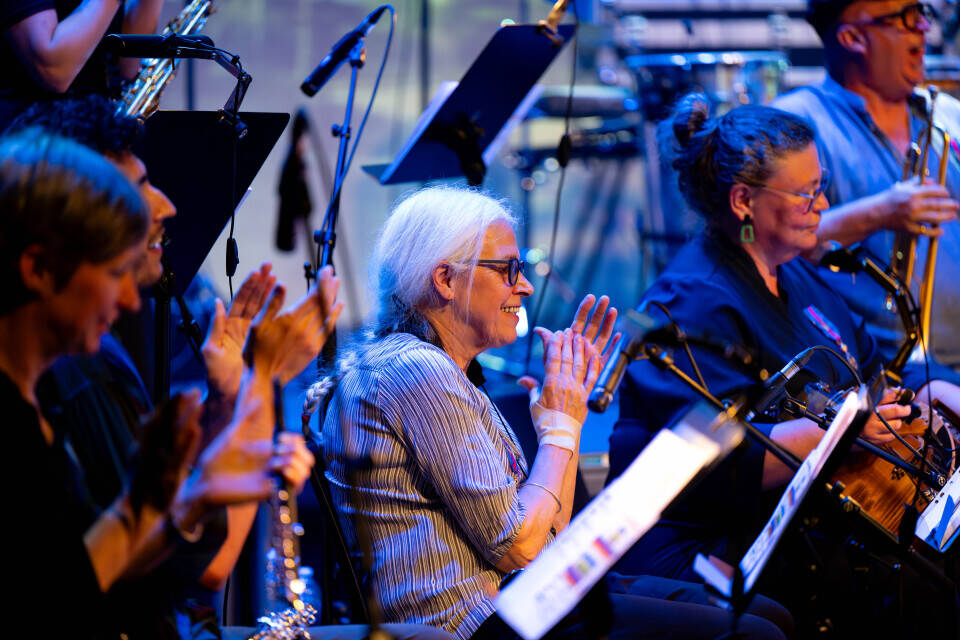
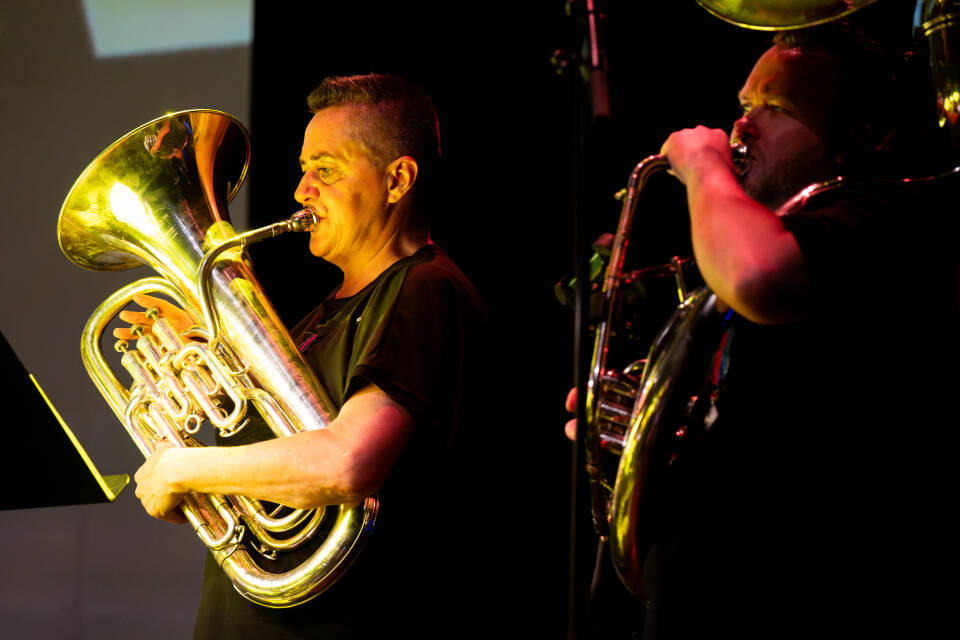


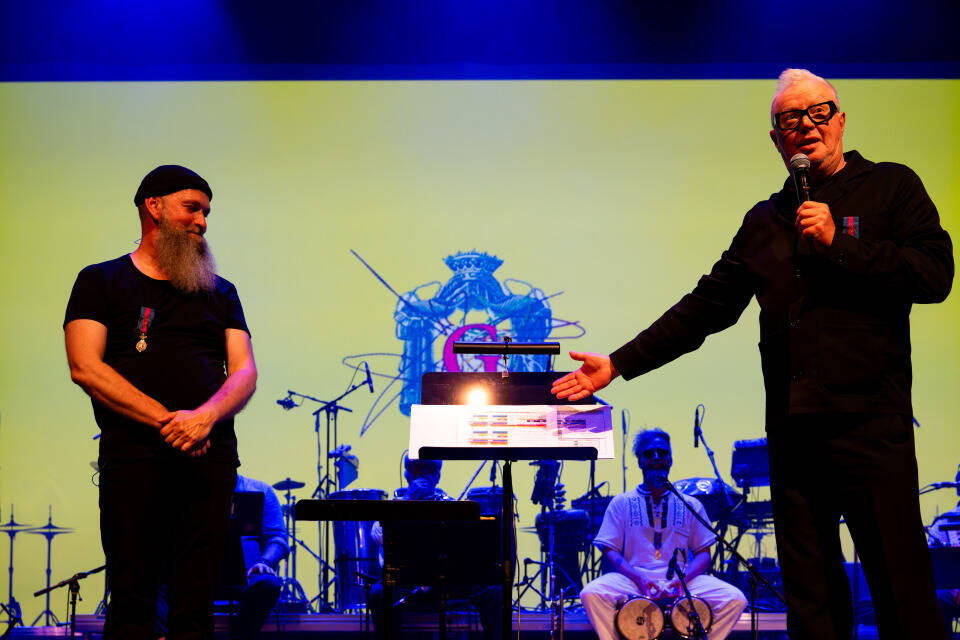


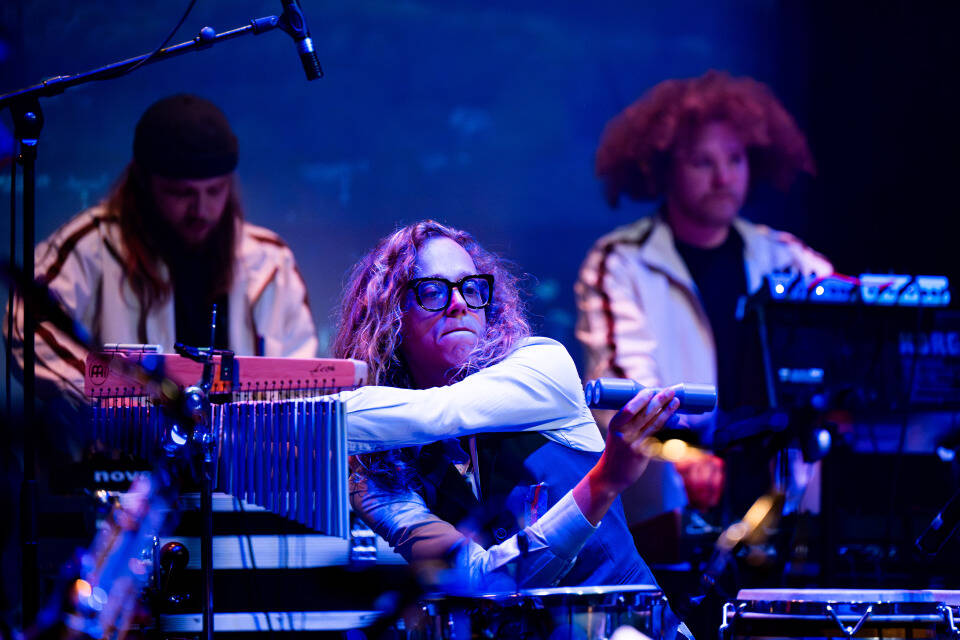

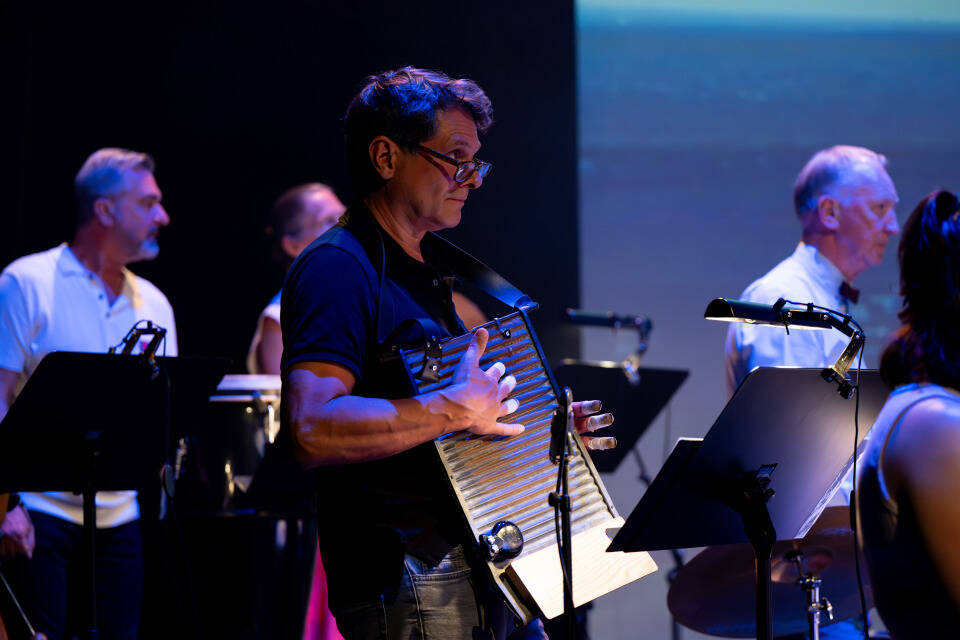

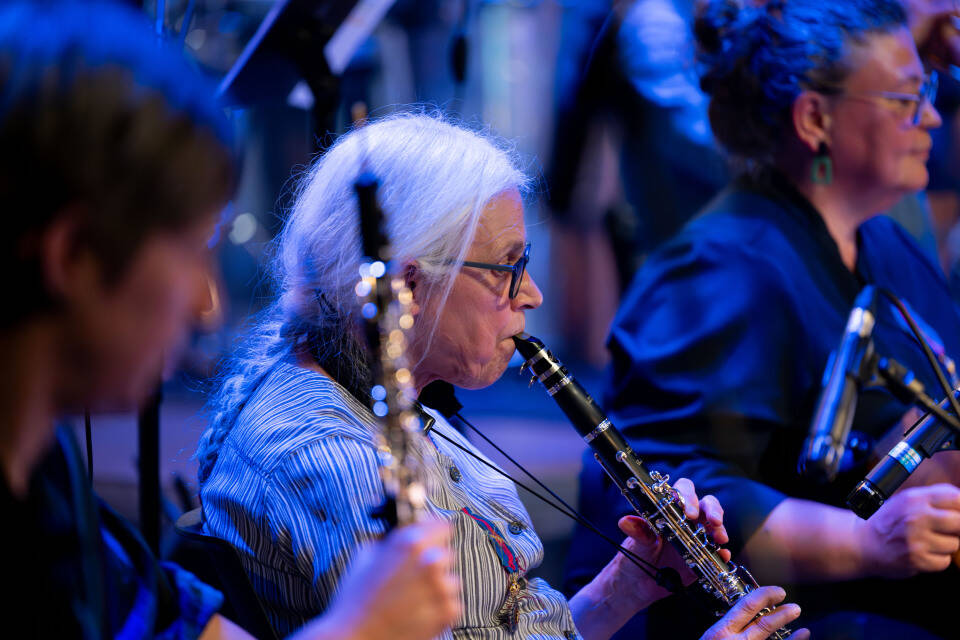
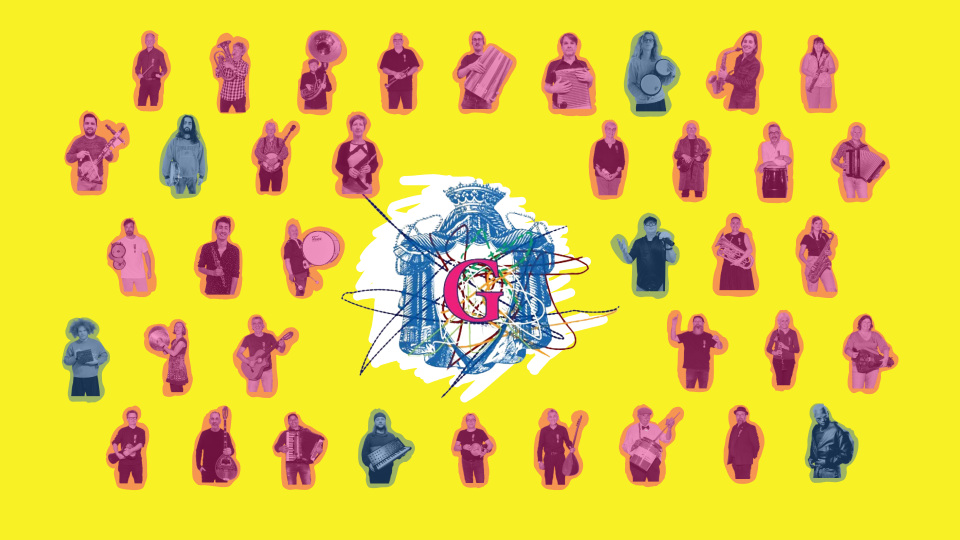
The Great International State Orchestra of Genk has one ultimate dream: to perform for the King. But before that happens, this young ensemble of pure hobbyists still has some ground to cover. And what better place to take that next step than the stage of the C-mine cultural center?
“When B-Classic asked us to create a show with professional artists, I had to scratch my head for a moment,” says Danny Bierset, one of the driving forces behind the orchestra. “Our musicians are all amateurs. Some are classically trained or play in local marching bands, while others picked it up at Greek weddings or in Italian bands. There are even those who can’t read a single note and play purely by ear.”
But after plenty of hard work and rehearsals, everything clicked. “The first time I heard our musicians playing through the sound system, I was blown away,” Bierset says. “Standing on the C-mine stage is a completely different ball game than playing in the street. It demands so much more precision.”
A week after the premiere, he still looks back with pride: “I had no idea we could sound that powerful.” Eastern modes, Turkish quarter tones, a lack of sheet music: none of it proved a barrier. On stage, it just worked. What once seemed impossible felt completely natural.
Mathematical precision
The project originated at the request of Hasselt University, on the occasion of Dies Natalis, the university’s annual anniversary. “I saw the orchestra last year, unamplified, in a small setting,” recalls the university’s project manager Marc Croes. “I was immediately struck by the warmth and authenticity, and saw potential for a larger production.”
Under the wings of B-Classic, a local performance at Cinema Victoria in Genk evolved into a fully-fledged production, bringing together the Genk-based electronic collective Suna, guest vocalist Gregory Frateur, Bert Peyffers and MC Stijn Meuris. A new show is already in the works, featuring rapper and soul singer Fred Gata as a musical guest.
“It’s an exciting concept,” Peyffers says, “but it came with an extra challenge: you can’t just change the music of an orchestra where not everyone can read a score. Together with Quinten Godts from Suna, I built intros around the tracks, giving both the electronics and the guest singers the freedom to do their thing.”
That approach initially raised some doubts for Godts, though they proved unfounded. “Suna makes rave music with drumbeats inspired by the nineties. Not exactly what you associate with an orchestra. But the sounds of our analogue synths turned out to be a perfect match for the Balkan and Eastern flavour of the State Orchestra."
Godts had never worked with amateur musicians before, and it makes him want more. “Hobbyists approach music more playfully. It took us right back to when we started Suna, with that same raw energy. These days, we’re used to being able to produce any sound we want with our synths. Acoustic instruments are more limited: you can only blow into them or play them with your hands. Working within those boundaries forces you to think about music in a really interesting way.”
Bob Permentier, managing director of B-Classic, takes it a step further: “Every professional musician should experience this at least once. Because they are so highly trained and disciplined, professionals often find themselves confined by their pursuit for perfection. Amateurs don’t carry that burden: they live and breathe music, and in doing so, they are every bit as professional. Their approach is disarming, and infectious. That is the very essence of music.”
“What’s more,” Godts adds, “how cool does a hurdy-gurdy sound? Or an oud? We definitely need to do something with that in Suna.”

The Excel score
These instruments are not a gimmick. The orchestra reflects the city itself: a crossroads where people from all kinds of backgrounds come together. The ensemble was founded two years ago, inspired by the street bands of New Orleans that play jazz and blues standards at community gatherings.
“Together with composer and conductor Herwig Pans, I noticed that while Genk has plenty of bands, the city lacked a shared repertoire,” Bierset says. “We wanted to change that.”
Following a call for musicians, forty people applied. Some even submitted resumes packed with experience in professional state orchestras abroad. “Unfortunately, those people didn’t fit the vibe we were going for,” Pans adds.
In the end, thirty musicians remained. They held jam sessions in small groups, after which Pans cut and pasted fragments of melody, rhythm and harmony into twelve compositions, each named after a neighbourhood in Genk.
To teach these pieces to a group where some don’t read music, Pans devised an ingenious colour-coded system. It dates back to his time teaching children at a project-based school in Antwerp, where reading notes wasn’t a prerequisite for music class.
“It’s basically an Excel spreadsheet where coloured blocks show which theme we’re playing. For example, the chorus might be blue,” Pans explains. “Within each block, another colour indicates which instruments join in.” For those who do read music, a traditional score is also available.
But whether you are reading from paper or a coloured Excel block, the real challenge lies in blending all those distinct sounds. The orchestra’s lineup is a mix of instruments from entirely different traditions, Pans notes.
“We have a rommelpot, a plastic bucket with a skin stretched over it and a stick poked through the middle that creates a bass sound. Someone plays the trunfa, a Sardinian jaw harp. There’s the ribeb, a Moroccan bowed instrument, and the darbuka, a metal drum.”

Typically Genk
This eclectic mix flows together organically. The project isn’t about contrast, but connection. City carillonneur An Lommelen, who fills the air with the soul of Genk every week, recognises that magic. She has been part of the ensemble as a percussionist from te beginning.
“The orchestra doesn’t have a baton keyboard like a carillon,” she says. “But my musical interests are broad: I also play organ and violin, and I’ve just started learning guitar. Since the orchestra was short on percussion, Herwig asked if I would take on the cymbals. That means a lot of counting and staying sharp so everyone stays on track.”
For Lommelen, though, the instrument is secondary. To her, the orchestra is about something bigger, something that transcends the music itself. “You couldn’t just replicate this orchestra in other cities. Perhaps in other former mining towns, but only Genk has this unique blend of sounds. It’s something that really belongs here.”
“In fact, we’re like one big family. When I’m up in the church tower playing, the orchestra’s WhatsApp group lights up with photos of my fellow musicians downstairs having coffee together. The atmosphere is always great. That’s remarkable for a group where the youngest members are still students and the oldest is 82. It’s a musical ecosystem that could only thrive in Genk.”
Everything points to this being just the beginning. “The orchestra’s concerts are clearly gaining momentum,” says Herwig Pans. “We started out in the streets and made it all the way to the C-mine stage. The dream remains to play for the King here in Genk one day, but we’re open to traveling to Brussels instead. Word is they’ve got some National Day to celebrate over there every year on July 21st.”

Texts and interviews by Sue Somers
Photos by Liesbeth Driessen – UHasselt